
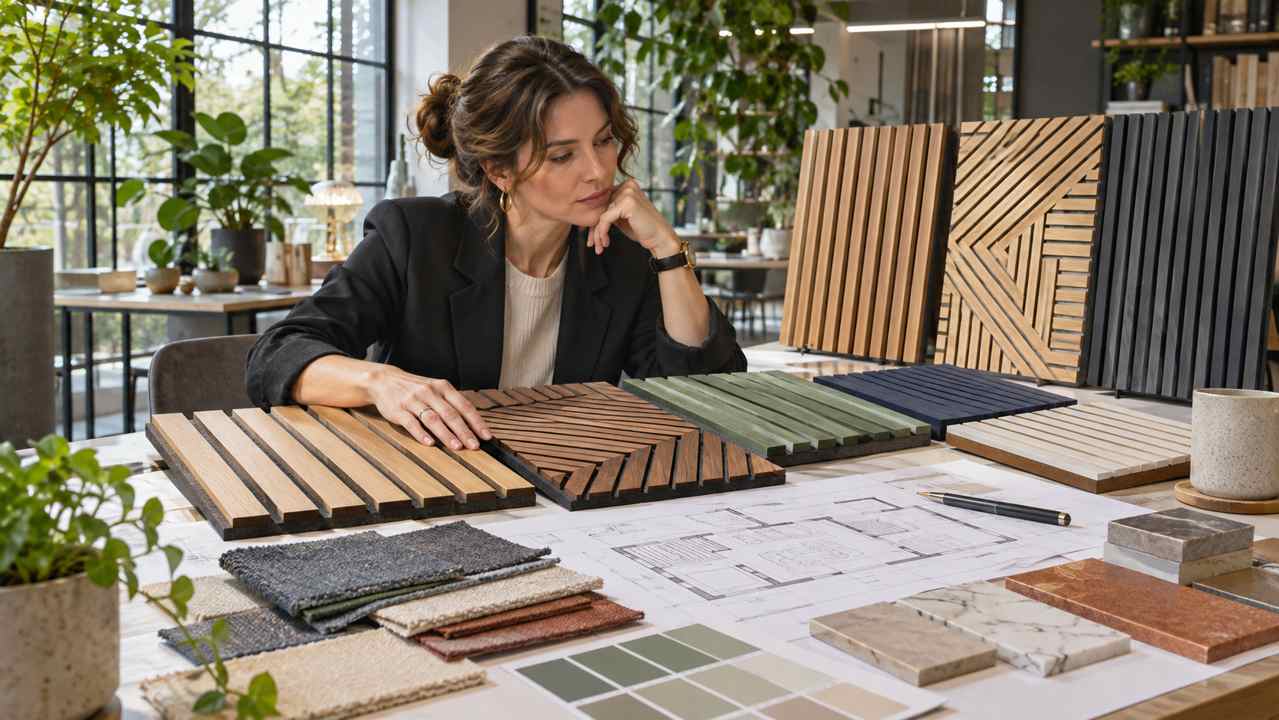
Wall treatments influence how people perceive the proportions, character, and atmosphere of interior spaces. Beyond colour and material, the arrangement of surface elements can establish movement, create depth, and direct attention. A carefully composed wall can make an ordinary room feel more structured, expressive, and visually connected.
Combining artistic expression with functional design, decorative acoustic wall panels introduce texture, repetition, and dimensional detail while helping manage indoor sound. Their contribution to interior composition depends on several factors, including pattern direction, spacing, lighting, colour, and placement. Understanding these relationships allows designers and homeowners to make more thoughtful decisions about wall treatments.
Understanding Visual Rhythm in Interior Design
Visual rhythm describes how repeated design elements guide the eye through a composition. The J. Paul Getty Museum identifies repetition, movement, proportion, and rhythm as fundamental principles that help establish unity within artistic compositions.
These principles apply to interior architecture as well. Repeated wooden slats, geometric shapes, and evenly spaced grooves establish a sense of order. Changes in their arrangement can introduce movement and visual interest.
Several elements contribute to visual rhythm:
- Repetition: Establishes consistency through recurring shapes, colours, and materials.
- Spacing: Controls the visual relationship between individual design elements.
- Alignment: Creates connections between architectural features and decorative surfaces.
- Variation: Introduces diversity without disrupting the overall composition.
A successful wall composition does not necessarily require perfect symmetry. Small variations in spacing or material can create an engaging design while maintaining a recognisable pattern.
How Linear Patterns Influence Spatial Perception
The direction of wall panels can influence how occupants interpret room dimensions. Vertical slats encourage the eye to travel upwards, drawing attention to ceiling height. Horizontal arrangements guide attention across the wall, potentially creating an impression of greater width.
However, these effects are more complicated than traditional design advice suggests. Research published in the Quarterly Journal of Experimental Psychology, titled “Wall Patterns Influence the Perception of Interior Space,” found that pattern density could influence perceived room dimensions more strongly than stripe orientation.
This suggests that designers should consider the width, frequency, and spacing of individual slats alongside their direction.
For example, narrow vertical slats may introduce a delicate rhythm suited to a compact living room. Wider horizontal panels might establish a more relaxed composition in an open-plan interior. Existing architectural proportions should help determine which arrangement feels appropriate.
Combining Artistic Expression With Functional Design
Traditional wall decoration often prioritises appearance. Acoustic surface treatments introduce an additional consideration: how sound behaves within the room.
The Whole Building Design Guide (WBDG) explains that sound-absorbing materials help manage reverberation and unwanted sound reflections. When ceilings provide insufficient absorption, other interior surfaces can contribute to acoustic comfort.
Decorative sound-absorbing panels offer opportunities to integrate this function into a broader artistic composition. Timber finishes can complement natural materials, while geometric arrangements can support contemporary interiors.
Nevertheless, an attractive surface does not automatically guarantee effective acoustic performance. Material composition, installation methods, backing materials, and coverage all deserve consideration. Designers should examine tested absorption ratings when selecting treatments for rooms with specific acoustic requirements.
The objective is to create a visually engaging environment that also responds to the practical needs of its occupants.
The Relationship Between Light, Shadow, and Texture
Textured walls change in appearance as lighting conditions shift. Raised surfaces catch light, while recessed grooves create shadows. These differences introduce depth and make repeated patterns more noticeable.
Technical guidance from architectural lighting specialist ERCO explains how grazing light can emphasise textured materials, including wood and natural stone. Placing lighting close to a wall can produce stronger shadows and highlight surface details.
Different lighting arrangements create distinct artistic effects:
- Natural daylight: Produces changing patterns as sunlight moves throughout the day.
- Directional lighting: Emphasises grooves, edges, and raised surfaces.
- Diffused lighting: Softens shadows and creates a more understated appearance.
- Concealed lighting: Highlights selected architectural details without introducing prominent fixtures.
Evaluating panel samples under actual room lighting can help prevent unexpected colour differences or overly dramatic shadows after installation.
Creating Focal Points Without Visual Overload
A decorative wall should have a clear relationship with its surroundings. Covering every available surface with an elaborate pattern may weaken the impact of individual design features.
Design guidance from Oklahoma State University Extension highlights the importance of proportion, emphasis, balance, and intentional variation when arranging visual elements.
Selective wall coverage provides a practical way to apply these principles. A textured surface behind a sofa, headboard, or reception desk can establish a focal point without overwhelming the room. Similar design principles can be observed in how temporary brand spaces build recognition, where carefully arranged textures, colours, and architectural features help establish a memorable visual identity. These approaches demonstrate how thoughtful spatial composition can communicate character without relying on excessive decoration.
Negative space is equally valuable. Plain walls and understated furnishings provide visual separation between decorative elements. They allow more intricate surfaces to stand out naturally.
Contrast should also serve a purpose. Dark timber against a neutral wall can create definition, while similar colours may produce a quieter transition between materials.
Common Composition Mistakes
Even attractive materials can produce disappointing results when their arrangement lacks direction. Successful compositions require attention to the relationship between individual features and the wider interior.
Common mistakes include:
- Excessive repetition: Extending identical patterns across too many surfaces can create visual monotony.
- Conflicting patterns: Combining several strong geometric designs may divide attention.
- Inconsistent proportions: Oversized patterns can dominate smaller rooms, while very fine details may lose definition across expansive walls.
- Unsuitable colour combinations: Competing undertones can weaken the relationship between furnishings and architectural finishes.
- Poor alignment: Awkward transitions around windows, doors, and furniture can interrupt visual continuity.
Reviewing material samples, architectural drawings, and furniture arrangements together can help identify these problems before installation. The aim should be a coherent composition rather than a collection of individually attractive features.
Conclusion
Acoustic wall treatments demonstrate how interior surfaces can contribute to artistic expression and practical functionality. Their patterns, textures, colours, and proportions influence how people experience architectural spaces.
Effective composition depends less on decorative complexity and more on thoughtful relationships between materials, lighting, furnishings, and room dimensions. Designers should also recognise that visual preferences and acoustic requirements vary between environments.
As interior design continues to embrace multifunctional materials, balancing artistic intention with everyday comfort will remain important. A well-considered wall treatment should complement the architecture, establish meaningful visual rhythm, and contribute to an environment that feels harmonious rather than unnecessarily elaborate.