
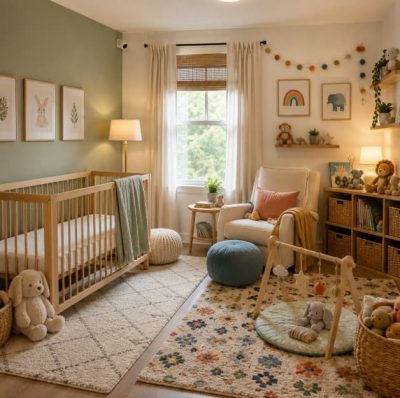
 Decorating a nursery gives parents plenty of opportunities to be creative. Colorful artwork, patterned rugs, themed accessories, and cheerful toys can make the room feel welcoming and personal. At the same time, a nursery is where a newborn may spend many hours sleeping, feeding, and settling. These two purposes do not have to compete. Parents looking for baby sleep help can start by creating an environment that feels engaging during the day without becoming overly stimulating at bedtime. A nursery can have personality without feeling visually crowded, and the goal is to decide where playful details will have the most impact and where simplicity is more useful. Here are some ways to create a nursery that feels cheerful during waking hours while staying comfortable for sleep.
Give the Sleep Area Some Visual Space
The crib does not need to be the most heavily decorated part of the nursery. In fact, keeping the immediate sleep area simple can provide a useful contrast to more playful parts of the room. Parents might use stronger colors and patterns around a reading corner, dresser, or storage area while keeping the wall near the crib relatively understated.
This also encourages a practical approach to crib safety. Don’t add pillows, stuffed toys, loose blankets, or decorative accessories to an infant’s sleep space just to make it look finished. Follow current safe-sleep recommendations when setting up the crib or bassinet. A simple sleep area can still look intentional when it fits naturally with the rest of the room.
Use Playful Colors as Accents
A restful nursery does not have to consist entirely of beige, white, or gray. Color can make the space feel warm and child-friendly. Instead of using several intense shades across every surface, choose a quieter main palette and introduce brighter colors in smaller amounts. A soft green room, for example, could include yellow artwork, colorful storage baskets, or a patterned rug.
This approach has another advantage: accents are easier to change. As the baby becomes a toddler with personal preferences, parents can replace accessories without repainting the whole room. The result can feel playful without making the bedroom visually busy from floor to ceiling.
Create Separate Areas for Sleep and Activity
Even a small nursery can have loose zones for different purposes. These do not need walls or physical dividers. Furniture placement and decoration may be enough. The crib area can remain relatively quiet, while a corner of the room holds books, toys, or brighter artwork. A comfortable chair can create another area for feeding and reading.
As the baby grows, the activity area can change to accommodate floor play and accessible toy storage.
Creating these visual zones helps parents concentrate decorative details where they make sense rather than spreading every toy, pattern, and accessory throughout the room.
Choose Patterns Carefully
Patterns can bring plenty of character to a nursery. Stripes, stars, animals, flowers, geometric shapes, and illustrated wallpapers are all ways to introduce a theme. But several competing patterns can quickly make a small bedroom feel crowded. If the wallpaper is bold, consider simpler curtains and bedding. If the rug has a strong pattern, the walls may work better with a quieter treatment.
Parents can also use patterned wallpaper on one wall rather than throughout the entire room. Removable decals offer another option for introducing playful shapes without committing to a major decorating project. The aim is not to eliminate patterns but to give them enough space to be noticed.
Plan Lighting for Different Times of Day
Nurseries need different kinds of light depending on what is happening. Bright lighting can be useful for cleaning, dressing, and daytime activities. The same lighting may feel unnecessarily harsh during a nighttime feed. Using more than one light source provides flexibility. A main ceiling fixture can handle general lighting, while a dimmable lamp or other softer light can be used during the evening.
Window coverings can help manage daylight during naps and early bedtimes. Position blinds, curtains, lamps, and electrical cords with safety in mind, especially as the baby becomes more mobile. Lighting can change the feel of a room without changing its decorations.
Keep Storage Simple and Accessible
Toys and books eventually become some of the most colorful items in a child’s room. When every item remains on display, even a carefully designed nursery can start to feel cluttered. A mixture of open and closed storage can help. A small shelf might display favorite books and a few attractive toys, while less-used belongings stay in drawers, cupboards, or baskets.
For newborns, storage should also make nighttime care easier. Diapers, wipes, spare clothing, and other essentials should have predictable places so parents can find them without searching around the room.
As children grow, review storage arrangements for safety, including securing furniture to prevent tipping.
Choose Décor That Can Grow With the Child
A highly specific newborn theme can be charming, but babies do not stay newborns for long. Choosing some elements with a longer life can make future decorating easier.
Furniture in simple finishes, nature-inspired artwork, adaptable shelving, and neutral window treatments can form the foundation. More age-specific personality can come from inexpensive, easy-to-replace items.
For example, framed prints can change when a child’s interests change. Storage baskets can be replaced, and a new rug can transform the room without requiring a complete renovation. This balance allows the nursery to feel suitable for a baby without locking the family into one theme.
Avoid Decorating for the Photograph
Nurseries shown online are often arranged to look perfect for a photograph. Real nurseries have a different job. They need to function during diaper changes, feeds, naps, early mornings, and exhausting nights.
Before adding another decorative item, ask whether it improves the room or just fills space. Space can be useful. It makes the room easier to clean, provides room for future needs, and prevents decorative objects from competing for attention. Practicality is especially important around the crib, changing area, and walking paths.
Aim for Balance Rather Than Perfection
No decorating style can guarantee that a newborn will sleep for longer stretches. Babies wake for feeding, comfort, and many other normal reasons. Parents should not feel that a colorful wall or patterned rug is responsible for an unsettled night.
Interior design can support the sleep environment. Controllable lighting, comfortable temperatures, manageable noise, safe sleep arrangements, and an uncluttered crib area matter more than following a particular nursery trend.
And there is still plenty of room for fun. By concentrating playful details in selected areas and keeping the sleep zone simpler, parents can create a nursery that feels joyful without becoming overwhelming. The best balance is one that works for everyday family life, not just the finished-room photograph.